
Wat gebeurt er met afgesloten jeugddossiers? Een nadere kijk op hun selectie, archivering en raadpleegbaarheid
Discipline
Social sciences
Humanities
History and Archaeology
Archival Science
Subject
jeugddossiers
selectie
archivering
raadpleging
Algemene Verordening Gegevensbescherming
juvenile case files
appraisal
archiving
accessibility
General Data Protection Regulation
Audience
Scientific
Date
2022-03-01Publisher
Larcier-Intersentia
Metadata
Show full item recordDescription
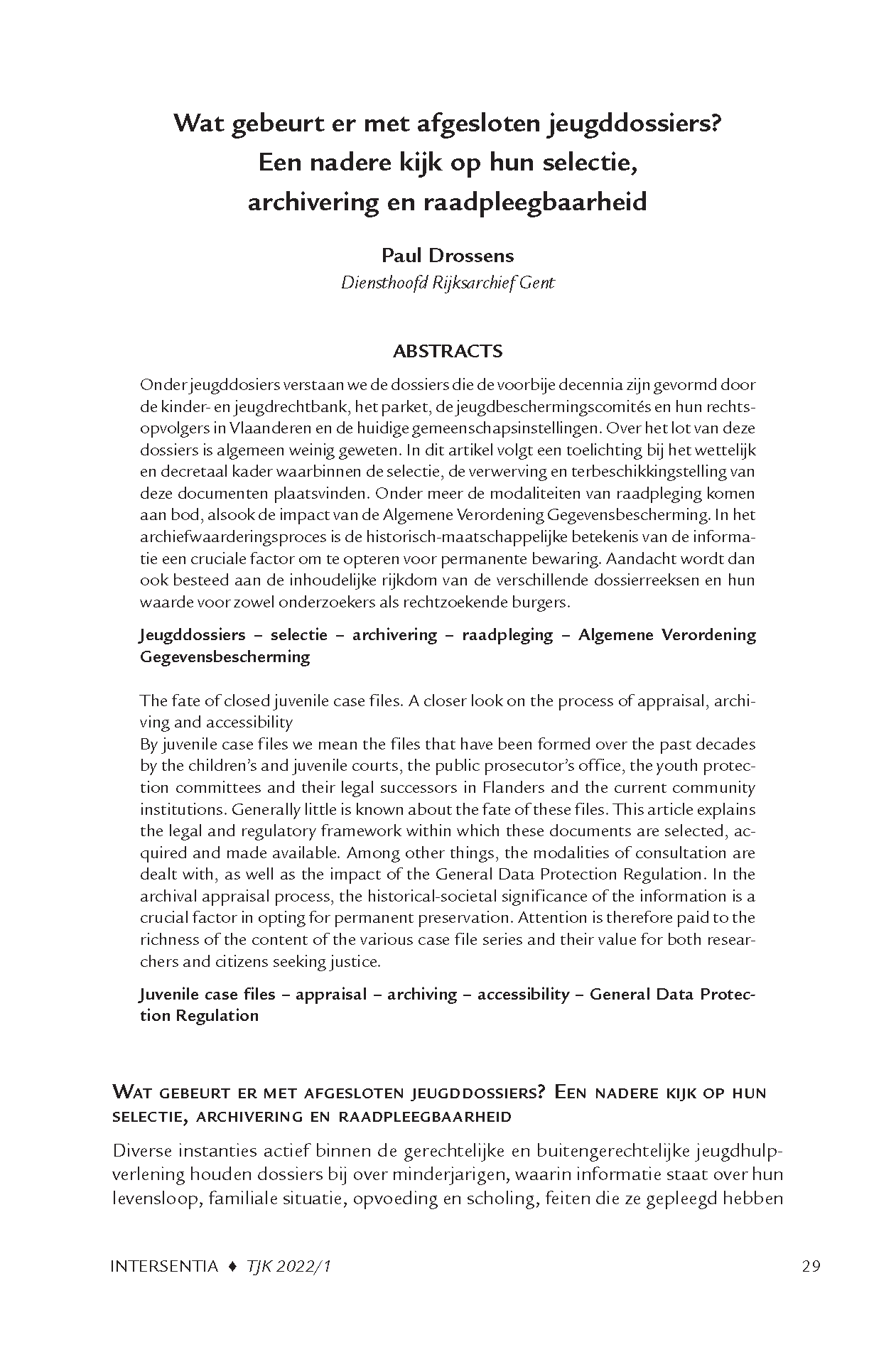
(NL) Onder jeugddosiers verstaan we de dossiers die de voorbije decennia zijn gevormd door de kinder- en jeugdrechtbank, het parket, de jeugdbeschermingscomités en hun rechtsopvolgers in Vlaanderen en de huidige gemeenschapsinstellingen. Over het lot van deze dossiers is algemeen weinig geweten. In dit artikel volgt een toelichting bij het wettelijk en decretaal kader waarbinnen de selectie, de verwerving en terbeschikkingstelling van deze documenten plaatsvinden. Onder meer de modaliteiten van raadpleging komen aan bod, alsook de impact van de Algemene Verordening Gegevensbescherming. In het archiefwaarderingsproces is de historisch-maatschappelijke betekenis van de informatie een cruciale factor om te opteren voor permanente bewaring. Aandacht wordt dan ook besteed aan de inhoudelijke rijkdom van de verschillende dossierreeksen en hun waarde voor zowel onderzoekers als rechtzoekende burgers. (EN) By juvenile case files we mean the files that have been formed over the past decades by the children’s and juvenile courts, the public prosecutor’s office, the youth protec tion committees and their legal successors in Flanders and the current community institutions. Generally little is known about the fate of these files. This article explains the legal and regulatory framework within which these documents are selected, acquired and made available. Among other things, the modalities of consultation are dealt with, as well as the impact of the General Data Protection Regulation. In the archival appraisal process, the historical-societal significance of the information is a crucial factor in opting for permanent preservation. Attention is therefore paid to the richness of the content of the various case file series and their value for both researchers and citizens seeking justice.
Citation
Drossens, P. (2022). 'Wat gebeurt er met afgesloten jeugddossiers? Een nadere kijk op hun selectie, archivering en raadpleegbaarheid'. Tijdschrift voor Jeugd en Kinderrechten, 2022 (1), 29–45.
Type
Article
Published version
Peer-Review
Yes
Language
nld